NEWS

11/5/2026
Cities for Security: Local governments across Argentina learning from on-the-ground experiences and strengthening a network so they don't have to face their challenges alone.
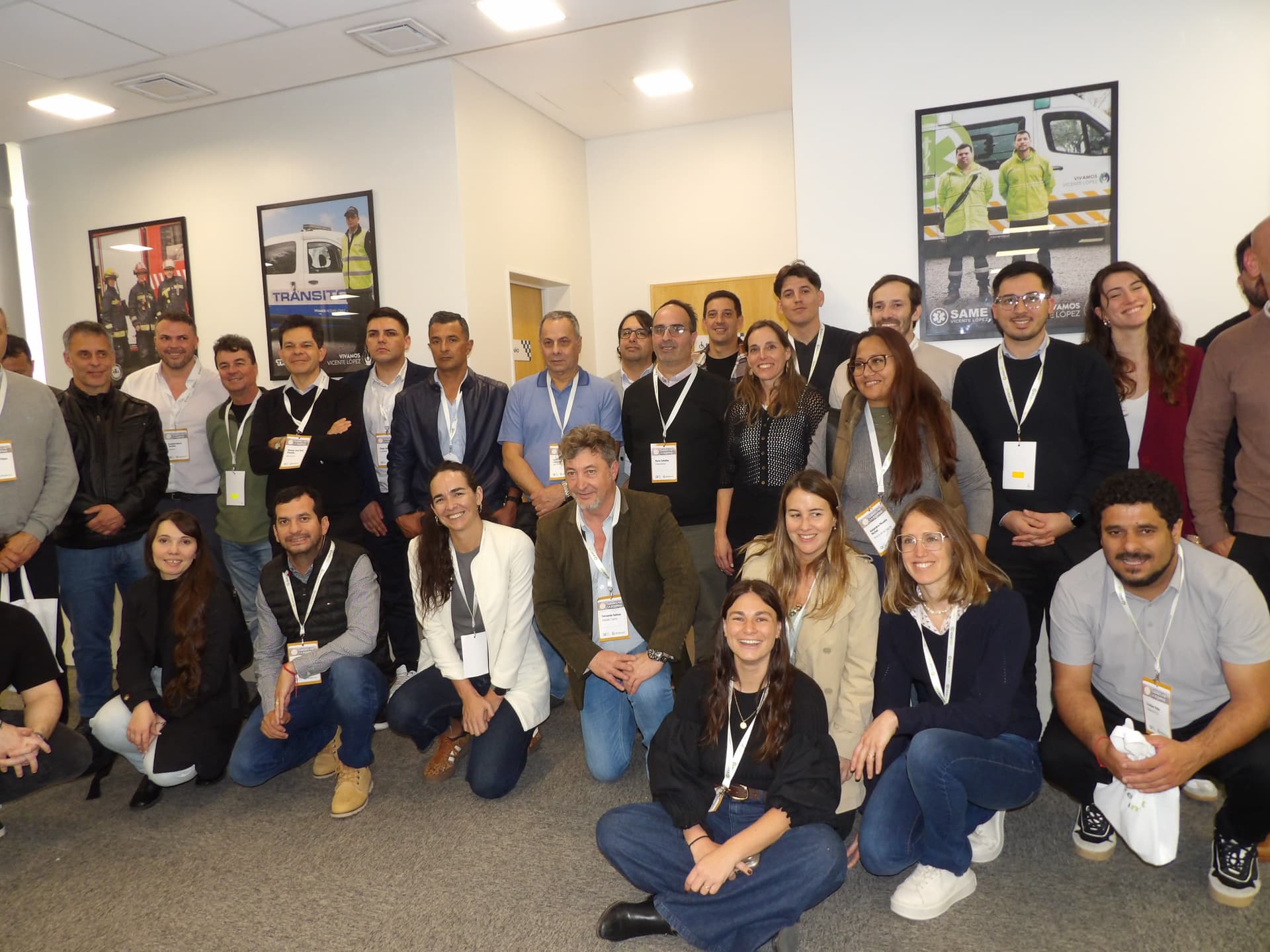
More than 35 public officials from 22 cities across 10 provinces, together with the Ministry of Security of Río Negro, took part in an in-person gathering organized by RIL Argentina in partnership with Exanet. Behind the work of each participating local government lies the safety and well-being of more than 5.5 million residents.
The event took place within the framework of the Cities for Security program and RIL's Citizen Security Community. It was designed as an on-the-ground learning experience, allowing teams to explore firsthand solutions for video surveillance, monitoring, and intelligent management through visits to the cities of San Miguel and Vicente López (Buenos Aires Province). Both are leading examples of municipal security management and have incorporated technology in partnership with Exanet, a leading video surveillance company with more than 25 years of experience working with local governments.
The gathering was organized over two days. On the first evening, a welcome dinner created an opportunity for participants to get to know one another, share the challenges facing their cities, and strengthen their network before heading out into the field. The following day, visits to both cities offered inspiration through concrete examples and concluded with a session to share key takeaways and lessons learned.
Learning on the ground
The visit began in San Miguel, where Secretary of Security Héctor Calvente and his team presented the municipality's management model. Participants visited the Monitoring Center, learned about the use of data analysis tools and artificial intelligence for prevention, and explored the Ojos en Alerta (Eyes on Alert) neighborhood participation program. They then visited the Municipal Police Academy and the Logistics Center, where they learned how the municipality trains its officers and organizes the support systems that sustain daily operations on the streets.
In the afternoon, the visit continued in Vicente López, guided by the local Secretariat of Security team. Divided into groups, participants toured the Data Center, the Monitoring Center, and the Unified Dispatch Office, where different municipal departments work together to respond to emergencies. The day concluded in Vicente López with a session to share and reflect on everything they had learned.
A community strengthened through peer exchange
Beyond the visits themselves, the gathering created an opportunity to share perspectives and learn how other cities address common challenges. Participating cities had very different realities in terms of size, resources, and institutional frameworks for managing security. This diversity became one of the main sources of learning. Participants agreed on the value of having a space to share approaches, protocols, and experiences, and of knowing that other local governments face similar challenges.
Representatives from the following cities and jurisdictions took part in the gathering: Buenos Aires Province: Almirante Brown, Chascomús, General San Martín, Pilar, San Isidro, San Miguel, Tigre, Tres de Febrero, and Vicente López. Chubut: Comodoro Rivadavia. Córdoba: Alta Gracia and Río Cuarto. La Pampa: General Pico. Mendoza: Godoy Cruz and Luján de Cuyo. Neuquén: Rincón de los Sauces. Río Negro: Cipolletti and the Government of the Province of Río Negro. San Juan: San Juan Capital. Santa Fe: Rafaela, Rosario, and Venado Tuerto. Tucumán: Banda del Río Salí.
This gathering is part of RIL Argentina's ongoing work. For more than 12 years, RIL has been committed to connecting, training, and empowering local government teams. Through the Cities for Security program, it supports municipalities in diagnosing their challenges, strengthening their management capacities, and designing preventive citizen security policies. The Citizen Security Community, in turn, provides an ongoing peer-learning and exchange space for more than 150 public officials working in this field across over 115 cities throughout the country. Together, these initiatives aim to strengthen a network of local governments that learn from one another to improve the quality of life in their communities.